Showing posts with label music. Show all posts

Sunday, 27 July 2025

TOM LEHRER


Farewell Tom Lehrer (1928-2025) brilliant parodist and consummate performer of his own sharp, smart, witty – often wicked – songs like 'Poisoning Pigeons in the Park', 'We'll All Go Together When We Go', 'The Vatican Rag' and the incomparable 'Elements' song.

Tom Lehrer spent his brief, yet remarkable music career writing and performing parody songs that entertained millions. Biting, intelligent and socially conscious, his songs were intimate commentaries on society and politics in the 1960s. 
 
I salute this genius word-and-tunesmith and his legacy of songs that chart the social mores and neuroses of the psychotic sixties...

Friday, 11 August 2023

THREE CHEERS FOR POOH!


Whether or not you remember – even hold as beloved – those childhood immortals Winnie-the-Pooh and Christopher Robin before they were appropriated by Walt Disney back in 1966, I think you'll enjoy Enchanted Places, a double-CD recording of A. A. Milne's verses (and Pooh's inimitable 'Hums') from the quartet of nursery classics: When We Were Very Young, Winnie-the-Pooh, Now We Are Six and The House at Pooh Corner – all of them accompanied by irreplaceable decorations by the magnificent Ernest H. Shepard.
 
Today, however, I guess there many Pooh-lovers who will be unfamiliar with the musical settings that were composed during the height of Mr. Milne's public popularity; although if you mention titles like 'They're Changing Guard at Buckingham Palace', 'Hush, Hush, Whisper Who Dares (Christopher Robin is Saying His Prayers)', 'Halfway Down the Stairs' and 'Cottleston Pie', then you may recall having heard them sung by performers as diverse as Gracie Fields, Robert Tear, David Tomlinson and Burl Ives – not to mention Robin and Rowlf from The Muppets!
 
The music was the work of H. Fraser-Simson, a popular composer of British light music and the long-running operetta, The Maid of the Mountains, and these delightful settings that have endured for almost 100 years and are now available on this new double-CD – the first-ever complete recording of the Milne/Fraser-Simson collaboration – released by EM Records.
 
The songs are performed by baritone Grant Major, accompanied at the piano by John Kember and singer and pianist deftly present the songs with considerable wit and a lightness of touch that is perfectly suited to the verses’ delightful mix of humour, sentiment, nostalgia and nonsense.
 
I might, immodestly, add that there's a cameo appearance by Yours Truly on Disc 2, narrating Milne's amusing introduction to his song, 'The King's Breakfast', and I also wrote the liner notes telling the story of Mr. Milne and Mr. Fraser-Simson and their enchanting collaboration, illustrated with rare Milne family photos from my persoanl collection.
 
This recording will certainly please all lovers of light verse and light music and will delight the young and the young-at-heart.
 
Enchanted Places is available from Amazon HERE

Monday, 24 July 2023

SONG OF THE MORNING STARS

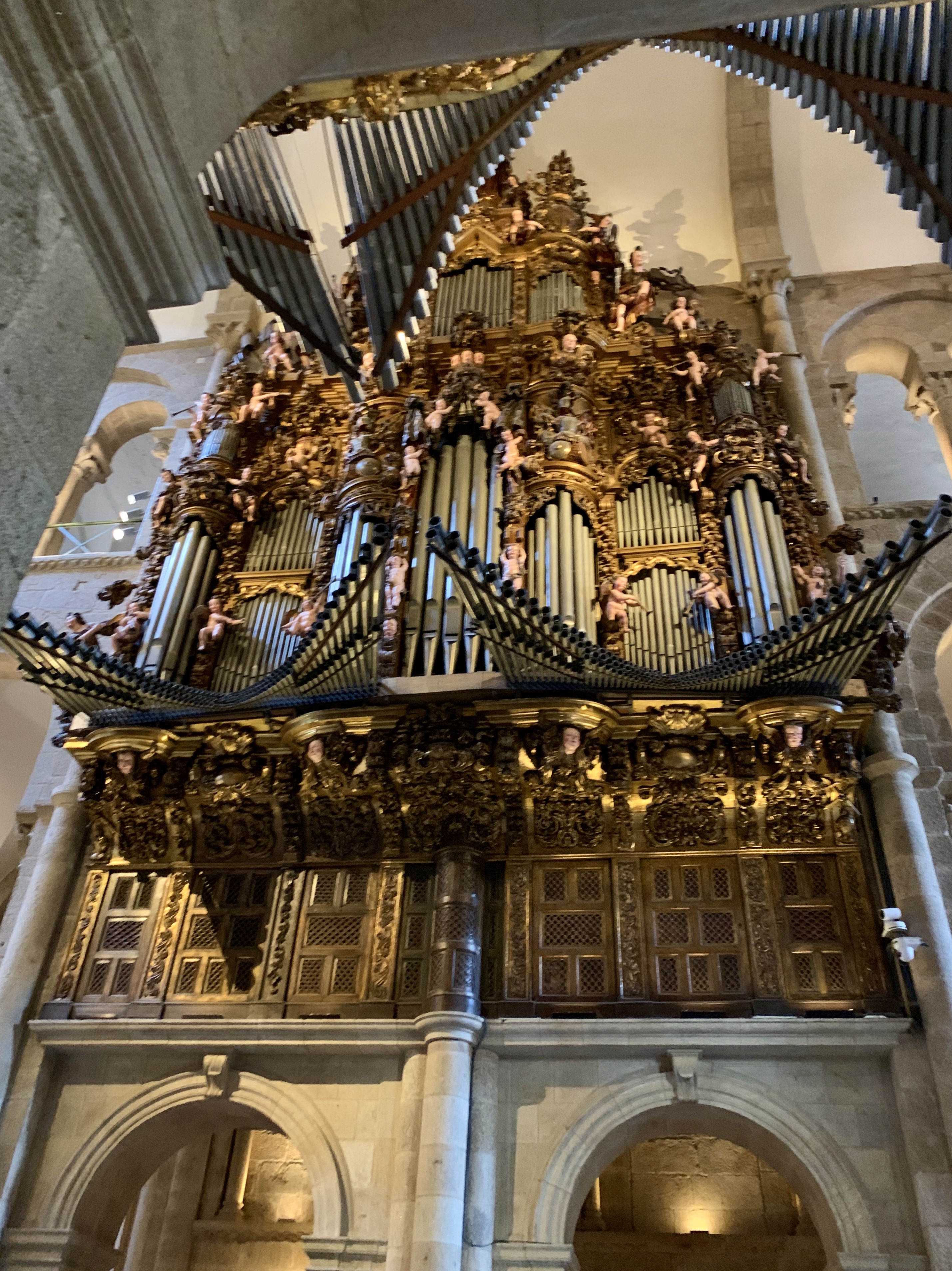
When we entered the Cathedral of Santiago de Compostela, the Mass had just ended but the organist was still at the keyboards. As its multiplicity of multi-directional pipes filled the vast building with glorious sounds, I was reminded of Thomas Carlyle who wrote:  

"Listen, and for organ music thou wilt ever, as of old, hear the Morning Stars sing together."


Friday, 5 January 2018

ORCHESTRA FOLK

Members of the Orchestra of Teatro La Fenice...

[Photos: © Brian Sibley & David Weeks 2017]


Saturday, 23 December 2017

O LITTLE TOWN...

It's very nearly Christmas, so here's a little entertainment I created (back in 1983) reflecting – not too irreverently, I hope – on the very first Christmas... 

A Birthday at Bethlehem stars the brilliant Dame Thora Hird and Peter Goodwright with Peter Bartlett and Tarleton's Jig...


Saturday, 20 December 2014

WHO'S AFRAID OF THE BIG BAD WOLF?

Not Peter!

It was in 1936 that Russian composer, Sergei Prokofiev wrote Петя и волк – or Peter and the Wolf – a composition for narrator and orchestra.

The work was commissioned by Natalya Sats and the Central Children's Theatre in Moscow as a new musical symphony for young people with the intention of cultivating "musical tastes in children from the first years of school". When it debuted on 2 May 1936, it was somewhat poorly attended and, as the composer admitted, "failed to attract much attention".

The wolf-hunting Peter has since redeemed himself and, amazingly, there are now over 400 recordings of the piece featuring just about every celebrity narrator you can imagine including actors, comedians, singers, media personalities and even politicians.

It’s hard to imagine Sir John Gielgud, Boris Karloff, Sharon Stone, Itzhak Perlman, Edna Everidge, Sean Connery and Mikhail Gorbachev having anything in common? But they have! Along with Basil Rathbone, Peter Ustinov, David Bowie, Hermione Gingold, Christopher Lee – not to mention baseball pitcher, Tom Seaver; ballet dancer, Anthony Dowell and First Lady, Eleanor Roosevelt – they have all narrated versions of Peter and the Wolf.

Some of these are featured in tonight's Archive on 4 on BBC Radio 4 at 7:00 pm (just before the final episode of The Once and Future King!) in which Sir Christopher Frayling tells the story of Prokofiev's composition from it's conception to its present status as one of the best known pieces of classical music written for children.

I have a brief cameo among the contributors, discussing the Disney connection that – with the appearance of Peter and the Wolf as a segment in the 1946 animated feature, Make Mine Music – brought the work to a wider audience than the composer could have ever imagined.

The journey from score to screen began in 1938: Prokofiev was touring the USA and, having seen and been captivated by Disney's recently released debut feature length cartoon, Snow White and the Seven Dwarfs, went to visit "le papa de Mickey Mouse". It is likely that the use of music in Snow White (and in the earlier 'Silly Symphony' cartoons) suggested to Prokofiev that Peter and the Wolf might be a suitable subject for Disney's animated treatment.


Walt Disney would later claim that the composer told him that he had the filmmaker in mind when writing the piece, but that might be no more than Disney spin – or, of course, Prokofiev's flattery! In any event, Disney heard Prokofiev playing the suite on a rickety old piano in the studio's music department and negotiations began to secure the screen rights. 

Almost 20 years after the event, in September 1957, Disney staged a recreation of that historic encounter in an episode of his weekly ABC television programme, Disneyland, with himself in jumper and a cravat as his younger self and the German-born American composer and pianist Ingolf Dahl acting (and playing) for Prokofiev...


Although this doesn't come out in tonight's programme, Disney immediately saw the composition as the perfect fit with plans: Fantasia was in pre-production and part of the intent for that animated concert was that the film would return to cinemas year on year with a changing repertoire of pieces. Peter and the Wolf was slated as one of the items to be added to Fantasia's future programme, but the film's initial failure at the box office in 1941 and the US involvement in WWII (which impacted heavily on Disney's film production) meant that it never found its place in Fantasia

It was not, therefore until 1946, when Disney released Make Mine Music: a compilation of short films mostly based on popular music and songs (often referred to as "the poor man's Fantasia") that the world got to see the Disney version of Peter's daring exploits through the winter wonderland of a snow-laden forest in pursuit of a superbly scary wolf...


The original Fantasia connection was not entirely lost as the piece opens with semi-abstract animations based on the instruments and musical motifs. The highly idiosyncratic narration is provided by Sterling Holloway, who had already voiced the Stork who delivers the baby elephant in Dumbo and Flower the Skunk in Bambi and who would go on to provide the voices of the Cheshire Cat in Alice in Wonderland, Kaa the Python in The Jungle Book and many others, perhaps most notably, Winnie-the-Pooh.


This edition of Archive on 4 programme proves a fascinating listen.

Sunday, 7 April 2013

TRAVELLER'S TALES

Funny how things come back from the long past to haunt – or enliven – your present...

My good friend, composer David Hewson (who scored a number of my shows and radio plays) has put on line an avant garde composition, Not Wanted on Voyage, that he wrote in collaboration with one of Britain's woefully overlooked modern composers – Richard ('Tony') Arnell.

Richard also plays the piano in the piece (recorded in 1990) and provides additional voices, while the poem itself is read – by me!

If you're game for ten minutes of unusual listening, join us on deck...

Saturday, 2 February 2013

FORTY DAYS ON

Today – forty days after Christmas – is the ancient Feast of Candlemas...


Marking the mid-point of winter, halfway between the shortest day and the spring equinox, the name Candlemas derives from the custom of taking into church the candles to be used in the coming year and blessing them.

Since the earliest days of the Christian church, this festival has signalled the formal ending of the Christmas season by commemorating an event recorded in the Gospel of St Luke.

Following the Jewish tradition of pidyon haben, Mary and Joseph presented their first-born child, Jesus, in the Temple in Jerusalem. According to Luke, the event was witnessed by an elderly devout Jew named Simeon who had received a promise from God that he would not die until he had seen the Saviour of the world.


Taking the child in his arms, Simeon spoke words that, across the centuries, have featured in the daily services of worship throughout the Christian church.

In Greek the words say...
νῦν ἀπολύεις τὸν δοῦλόν σου, δέσποτα, κατὰ τὸ ῥῆμά σου ἐν εἰρήνῃ·
ὅτι εἶδον οἱ ὀφθαλμοί μου τὸ σωτήριόν σου,
ὃ ἡτοίμασας κατὰ πρόσωπον πάντων τῶν λαῶν,
φῶς εἰς αποκάλυψιν ἐθνῶν καὶ δόξαν λαοῦ σου Ἰσραήλ.
In Latin...
Nunc dimittis servum tuum, Domine, secundum verbum tuum in pace:
Quia viderunt oculi mei salutare tuum
Quod parasti ante faciem omnium populorum:
Lumen ad revelationem gentium, et gloriam plebis tuae Israel.
 And in the English of the 1662 Book of Common Prayer...
Lord, now lettest thou thy servant depart in peace : according to thy word.
For mine eyes have seen : thy salvation,
Which thou hast prepared : before the face of all people;
To be a light to lighten the Gentiles : and to be the glory of thy people Israel.
The prayer, known as the 'Nunc Dimittis', became part of the night time office of the Christian church called Compline, or Evening Prayer, and many composers have written settings for the 'Nunc Dimittis' from Thomas Tallis to Arvo Part. (You can click on the composers' names to link to recording of their versions.)

In popular culture, the 'Nunc Dimittis' will be forever associated with the closing titles of the 1979 BBC TV dramatisation of John le Carré's spy novel, Tinker, Tailor, Soldier, Spy in a setting by the late Geoffrey Burgon (responsible for another magnificent television score accompanying Brideshead Revisited).

The Tinker, Tailor, Soldier, Spy version was sung by a boy soprano (the uncredited Paul Phoenix) and, despite having a child singing what is the prayer of an old man, it it has a haunting and gloriously ethereal sound as you can hear here.

Here's another famous former boy soprano, Aled Jones singing Burgon's setting in company with a current young chorister, Ben Crawley...


This Candlemas, I wish you all a day of peace and tranquillity.

Images: Candle in St John the Divine, Kennington by Brian Sibley © 2012; 'Simeon's Song of Praise' by Aert De Gelder c.1700

Sunday, 10 June 2012

A DAY AT THE DARK CARNIVAL

Still thinking about Ray Bradbury...

Twenty-two years ago, I collaborated with my long-time friend, composer David Hewson, on a concert work for voices and narrator, entitled The Autumn People.

Dedicated to Ray to mark his 70th birthday, the piece was inspired by his vision of American carnivals, fairgrounds and freak shows at the turn of the last century as depicted in a number of his books – most notably Something Wicked This Way Comes.

The work was premiered in London at The British Music Information Centre in October 1990; and I have uploaded it via SoundCloud as a tribute from Dave and myself to one of the most imaginative writers in the last and present centuries...

Roll up! Roll up! Roll up!
Pay up! Step up and see the show!


WordsBrian Sibley * MusicDave Hewson
SopranoJacqueline Bremar * Tenor Richard Berkley-Steele
Flute  – Georgina Roberts * PianoDavid Elwin 
 Narrator and Voices of the Animals – Brian Sibley


Friday, 30 March 2012

MR BANJO MAN

Farewell to
EARL SCRUGGS

"The father of bluegrass banjo"
(1924-2012)


Yesterday's Guardian put it this way: "[Earl] Scruggs was the most influential banjo player there has ever been: he was banjo's Bach, Beethoven and Bob Dylan all rolled into one. He pioneered the three-finger style of picking responsible for the sound you hear whenever you think of the instrument's fleet-fingered, jangling sound. Until then, banjo players was played in the traditional "claw-hammer style" – Scruggs's use of the third finger allowed him to play the driving arpeggios that we associate with banjo music today.

Here's his most famous composition, 'Foggy Mountain Breakdown' which became widely known through its use in the 1967 film, Bonnie & Clyde, and features (if you can count quickly enough) eleven notes a second!


Probably his other best-remembered recording is the title-song to the 1962 TV show, The Beverley Hillbillies performed with here (and sung by) Lester Flatt...


Wednesday, 18 January 2012

SITWELL BY SIBLEY

One of the nicer things about having to shift stacks of books and papers for the pending move has been the finding of things long forgotten, including a small cache of Sibley drawings that have recently come to light.

As a young man, one of my ambitions was to become (in addition being an actor) a cartoonist and caricaturist. My drawing board idols were three artists who dominated my imagination and whose names began with an 'S': Searle, Scarfe and Steadman.

Here is a caricature I made in my late teens of the poet (and glorious eccentric) Dame Edith Sitwell...


I think, when I made this cartoon, I had only recently discovered Facade: An Entertainment, the work that Dame Edith created in collaboration with William Walton and which, to a young enthusiast of the nonsense literature of Lewis Carroll and Edward Lear seemed to have more than a little in the way of kinship to the lands where Tulgey Woods and Bong Trees might grow!

Here is a short selection of numbers from Facade, performed on a 1953 British Decca recording by the poet and Peter Pears with Anthony Collins conducting The English Opera Group Ensemble...


Sunday, 4 December 2011

A GLIMMER FROM THE PAST

It's amazing what turns up on YouTube every now and again: such as lost moments of TV that you thought you'd never see again. The other day, I stumbled over myself – well, that is, the me I used to be a decade or two ago! – hosting the BBC TV's then Sunday morning God-slot, First Light.

There's mercifully little of me in this clip: basically just the opening to the programme and my introduction to Adrian Snell and Friends' performance of 'By the Waterfront', an appropriate number for a Sunday morning...


Seeing this snippet of my brief-ish TV career, brought back a lot of memories of working at the BBC studios in Manchester and of being totally thrown in at the deep end of television presentation: learning, amongst other skills, to read auto-cues and take direction via an earpiece... Of course, in those days, I was still young enough to believe I could do anything and never once batted an eye-lid at tackling something new... Nowadays, I'd be a tad more reticent!

Having been told, two days ago, by The Church Next Door (in a outburst of pre-Christmas spirit) that we have to vacate our flat by 27 January, I rather wish I was still presenting a religious current affairs programme!

As a result of the imminent upheaval caused by having to move our joint 60 years of possessions (or, I guess, that should be 120 years) – out, into storage and possibly – at some point in the future, as yet unknown – back in again, is likely to curtail much serious (or even trivial) blogging for a while; but if and when I disappear from view, rest assured I will, eventually, return!

Tuesday, 1 February 2011

THE BARRY TOUCH

Many tributes have been paid in the media to the incomparable legacy of film music left by John Barry who died on Sunday.

Just about everyone knows and can hum at least three or four of Barry's themes (whether its one of those early James Bond songs or the themes to Born Free, Dances with Wolves or Out of Africa), but here are two of my personal favourites from his scores: the Academy Award-winning music for one of the seminal movies of my teenage cinema-going: the 1968 film, The Lion in Winter starring Peter O'Toole and Katherine Hepburn...


And the elegiac theme composed for one of my all-time best-loved pictures: the 1980 Christopher Reeve/Jane Seymour weepy, Somewhere in Time...


If you are a fan of John Barry's music, you might like participate in what is hoped will be a unique British tribute to one of our truly great popular composers. The idea, suggested by a group of his friends and admirers, is to get enough copies of Louis Armstrong's version of Barry's 'We Have All The Time In The World' bought to make it No. 1 on the UK chart.

It's important that a specific Armstrong track is singled out, and the one people are being urged to buy is from On Her Majesty's Secret Service (Soundtrack from the Motion Picture) Remastered. Here's the link.

There's a Facebook group dedicated to achieving this aim and you can find details here.


JOHN BARRY PRENDERGHAST

3 November 1933 – 30 January 2011


Monday, 8 November 2010

FANTASIA WILL AMAZE-YA!

At the time it was a HUGE adventure. It was forty-five years ago and I was planning how to skip school. I had never played truant before: I wasn't that kind of kid – mainly because I simply didn't have the guts!

But this was an emergency!

Walt Disney's 1940 classic, Fantasia, was showing at a local picture-house. This was in the days before videos and DVDs and this particular Disney film was only ever shown, every few years and strictly as one-day-only screenings.

It was showing at the nearby Bromley Odeon on a Wednesday and being mid-week, with school the following day, I knew my parents would never allow me to go to the evening performance, so I simply had to see it in the afternoon.

I had read about this film, I had pored over pictures from the various sequences reproduced in books and seen one or two clips on black-and-white TV, but I had never seen the movie itself! What's more, if I missed it this time around, I'd have to wait years to get another chance!

So began the best acting performance I've ever given. Once at school, I developed a irritating cough that worsened throughout the morning's lessons until I was sent to the deputy headmaster, Mr Edwards, who was also responsible for First Aid and all medical referrals. By this time I was sniffing and snuffling with the occasional fit of teeth-chattering shivers thrown for added effect. My temperature was taken and by some miracle (a combination, perhaps, of an excitement-induced adrenalin rush and sheer will-power) it was slightly up!

Mr Edwards told me to go home at once. I needed no second telling: I was out the school gate and on the bus to Bromley. Within the hour I was sitting in the dark, succumbing to the thrilling and astonishing experience that is Disney's beautiful brave, bold and brazen collaboration with conductor Leopold Stokowski and the Philadelphia Orchestra in "Seeing music and hearing pictures"!


I was drowned in unforgettable imagery that, however many times I have seen Fantasia since, is for me, forever associated with the illicit nature of this particular cinema visit.

There were the colorful abstractions accompanying Bach's Toccata and Fugue in D Minor; the dew-drop, frost and snow-flake fairies that with the Cossack thistle and Chinese mushroom dancers interpreted Tchaikovsky's The Nutcracker Suite; and the hilarious pastiche ballet for ostriches, hippos, elephants and alligators choreographed to Ponchielli's Dance of the Hours.


Then there was the Bacchanalian romp on Mount Olympus (flying horses, centaurs, unicorns, fauns and gods) set to Beethoven's Sixth Symphony, The Pastoral; and the juxtaposed sequences featuring a Black Sabbath with devils, demons, hags and harpies cavorting to Moussorgsky's Night on Bald Mountain and a devoutly reverential procession of pilgrims making their way through a forest of Gothic-arched trees to the strains of Schubert's setting for Ave Maria.

There was the relentlessly brutalising music of Stravinsky's The Rite of Spring (that I had never heard before) which provided a soundtrack to a shockingly violent pageant of prehistoric life on earth; and the piece of music that kick-started the project: Dukas' The Sorcerer's Apprentice, which provided Disney's cinematic alter-ego, Mickey Mouse, with an inspired comedic turn that ranks alongside the best of Chaplin and Keaton and which created one of the studio's many enduring iconic images...


I left the cinema with my ears buzzing and my eyes boggled! I had never seen anything like it in my life and I was both thrilled and very slightly traumatised.

The journey home on the bus remains as a bizarre memory: I was reeling – my imagination drenched from the splash and dazzle of the film I had just sat through – but, at the same time, I was terrified by the realisation that my truancy might yet be discovered if I should happen to accidentally run into a member of staff on my way home or, worse, any of my parents friends and neighbours who might wonder what I was up to and subsequently blow my cover!

As it happened, I was not found out. But this bit of luck was outweighed and overshadowed by the fact that I couldn't share with anyone my reactions to the devastating visual and aural experience that I had just enjoyed and which I now longed to wallow in all over again.

My days of truanting were at an end, but, from then on, I would scour the local papers looking for further one day screenings and would travel to any cinema that was on a bus route in order to relive the Fantasia experience.


Imagine, then, my total joy and delight when the Disney company invited me to record a new audio commentary for the film's 70th anniversary re-release on DVD and Blu-ray, which goes on sale today.

The first non-American 'Disney Historian' to get such a job, it gave me an opportunity to talk about the long and sometimes tortuous journey that Fantasia took to the screen: from a chance encounter between Walt Disney and Leopold Stokowski in an LA restaurant at which the idea of an animated film version of The Sorcerer's Apprentice was mooted, via the decision to develop the cartoon about the wizarding tyro and the runaway brooms into a full-length project initially known around the studio as The Concert Feature but which, eventually, became Fantasia...

Here's the original 1940 trailer...


Conceived as the most ambitious animated film ever made with a stereophonic sound system ('Fantasound') and with plans – albeit unrealised – for the film to be in 3D (remember this was 1940!) and have fragrances pumped into the theatre for certain sequences and a wide screen finale, Fantasia was, at the time, a financial failure and after its critically acclaimed opening in a special, 'showcase' format was hacked down for general release and distributed as the 'B' picture support for a Western!

Not everyone will be entirely happy with this re-issuing of the film in that the narrative links by the film's host – composer and musicologist, Deems Taylor – are not from the original soundtrack (having been lost in one of the many catastrophic re-packagings of the film) but are from a later release where they were re-created by a voice-over actor.

Others will deplore the continued absence, in the Beethoven sequence, of the politically-incorrect 'piccaninny' child centaur (a black stereotype reminiscent of Topsy in Uncle Tom's Cabin) who serves as a maid to the white 'centaurettes' and who was later excised from the film as being racially insensitive. Although 'Sunflower' (as she was known around the studio) has not to be restored, my commentary refers to her and attempts to explain why, today, the inclusion of such imagery would be offensive.


Happily, the musical score is (as it should be) from the original soundtrack as opposed to the version 're-created' for a later release by Irwin Kostal and the colours – by turn vibrant and subtle – dazzle the eye with a new freshness while the special effects from lava-spewing volcanoes to frost-covered autumn leaves are as stunning as they were in 1940.


It had always been Disney's intention to re-issue Fantasia every few years with variations to the programme – some sequences being retired and others added. As a result of many things – not least WWII – that never happened, or, at least not until Walt's nephew, Roy E Disney, took the courageous decision to make a new Fantasia for the Millennium.


In many ways, Fantasia 2000 rather confirmed what an exhausted and somewhat frustrated Disney had said back in 1940: "Oh, Fantasia! Well, we made it and I don't regret it. But if we had to make it all over again, I don't think we'd do it!"

Nevertheless, it contained some beautiful and wildly ingenious sequences that totally embraced the Fantasia concept and, as a result, deliver memorable combinations of music and imagery, such as the flamingo playing with a yo-yo to the music of Saint-Saëns...


In addition to the regular DVD and Blu-ray release of Fantasia, there is a double-disc version that includes Fantasia 2000 and an opportunity – sadly, only on Blue-ray – to explore another of Walt Disney's imaginative (though never realised) experiments: a surrealist collaboration with Salvador Dali entitled Destino that was, once again thanks to Roy E Disney, eventually brought to fruition many years after the death of both famous moustache-wearers!

In one of its many post-war re-incarnations, the film was promoted using the the tag-line "Fantasia will Amaze-ya!" Admittedly, not the most sophisticated of marketing gambits but, I believe, true then and now...

And I'll be appearing on Film 2010 BBC1 tomorrow, Tuesday, at 10:35 pm talking about the 70th anniversary of Fantasia and the state of animation today.


Monday, 2 August 2010

A LITTLE SATURDAY NIGHT MUSIC

On Saturday evening, our friend Sophie took us to the Royal Albert Hall for the BBC Promenade Concert's Stephen Sondheim at 80 tribute: an unforgettable birthday treat for Sibley at 61 --- thanks, Soph!

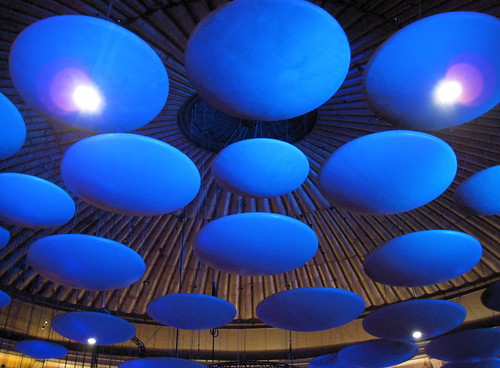
Obviously we didn't take any pix of the concert (photography not allowed) but we did snap a few pre-show photos of the RAH and, in particular, the mushroom-shaped space aliens that live in the building's dome disguised as fibreglass acoustic diffusing discs...

Alien Mushrooms (1)

Alien Mushrooms (5)
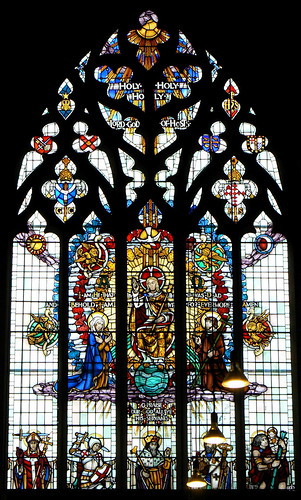
...and a shot of an open window up in the gallery that went a bit wrong and which I then turned into this...

Window

And here, until it gets removed (as it undoubtedly will) is a clip from the BBC telecast of Dame Judi Dench sending in Mr Sondheim's clowns...


Images: © Brian Sibley and David Weeks 2010

You'll find a RAH window by David on my Window Gazing blog and there are more mushrooms (and other stuff) on my flickr set Looking at London.

Saturday, 5 June 2010

RE: SPEKTOR

With every day I live, I become increasingly aware of just how little I know. This could easily be a depressingly negative realisation, but I prefer to look upon it as a constantly renewable potential for discovery. The discoveries tend not to be momentous but small and rather particular and I savour (rather than regretting) finding out things that I never learned or, because of the constant rat-raciness of life, simply missed...

For example, we were having dinner in our local pub the other evening when my ears tuned into the background musak, drawn to a curiously haunting voice that sounded as though it ought to be familiar, but which wasn't.

Enquiries revealed that it was Russian-born composer, musician and singer Regina Spektor, who - I now know - has been making music that has caught people's imagination for the past nine years but of whom I was unaware.

Never mind, better late than never (as we should all keep telling ourselves till we let go of that the last-ever breath) and I'm now a confirmed Spektor fan. You probably already know her songs by heart, but if it just so happens that don't, then let me introduce you...

This is Regina Spektor and Samson...


Tuesday, 11 May 2010

STORM-WEATHERED

Miss Lena Horne

June 30, 1917 – May 9, 2010


"My life has been about surviving.
Along the way I also became an artist.
It's been an interesting journey.
One in which music became first my refuge and then my salvation."


Sunday, 18 April 2010

TO BOLDLY SING

It was in the comments section of a post I wrote about the unsung lyrics to the Bewitched TV theme song, that the story of the unheard lyrics to the Star Trek theme song came up.


The scandalous facts are as follows...

The music for the pilot show in the series was written by Alexander Courage (left). At the time, the job probably seemed an unlikely long-term earner, but Courage was a pro: he arranged and orchestrated on some of the greatest movie musicals, including Show Boat, Seven Brides for Seven Brothers and Gigi and, until his death in 2008, worked on dozens of films and TV shows, orchestrating for John Williams on Superman and Jurassic Park and Jerry Goldsmith on Mulan, The Mummy and - er - Star Trek: The Motion Picture!

When, back in 1966, NBC picked up the Star Trek pilot and the show started its initial three-year run it was soon clear that it was heading off towards the much-sought-after and highly lucrative galaxy known as syndication. Alexander Courage could now expect to earn some decent royalties for his memorable theme tune.

But that was when the series' creator, Gene Roddenberry, stepped onto the flight deck of the Enterprise brandishing a piece of paper containing the 'lyrics' to the theme tune and laid claim to a half-share of Courage's royalties as 'co-composer'.

According to Courage, he had been pressurised into a 'hand-shake deal' that gave Roddenberry the option of writing lyrics although the contract he signed to that effect, he maintained, was done so unknowingly. Whatever the preliminaries, Roddenberry clearly saw the writing on the balance-sheet and cashed-in his option by writing lyrics that, whilst never used, generously contributed to the Roddenberry bank balance. Courage subsequently quit the series.

So, what are those mysterious lyrics?

Well, here they are - together with the original TV credit sequence - so you can sing along with Mr Roddenberry's money-spinning little ditty...

Beyond
The rim of the starlight,
My love
Is wand'ring in star-flight.
I know
He'll find in star-clustered reaches
Love,
Strange love a star woman teaches.
I know his journey ends never.
His star trek
Will go on forever.
But tell him
While he wanders his starry sea,
Remember, remember me.

OK, off you go... And good luck! Personally, I can't get beyond the sixth line, although, frankly, that's more than enough!


Wednesday, 7 April 2010

THE SOUL OF INDIA

90th Birthday Greetings to

RAVI SHANKAR


Without doubt, Ravi Shankar is the most celebrated performer of Indian music and his collaborations with George Harrison, Yehudi Menuhin, Philip Glass and others brought him and his music to a world-wide audience.

To celebrate his birthday, here are two magic moments from Shankar's career as a film composer: firstly a scene from the third film in Satyajit Ray's brilliant epic portrayal of Indian life, The Apu Trilogy - Pather Panchali (Song of the Little Road), Aparajito (The Unvanquished) and Apur Sansar (The World of Apu) - made between 1955 and 1959...


And, following Shankar's discovery by the Beatles (or, perhaps, vice versa!) and the first rush of international acclaim, here are the opening minutes of Jonathan Miller's 1966 TV play Alice in Wonderland (yes, I do know I keep going on and on about that film!) with a score performed by the composer and oboist, Leon Goosens...


Sunday, 4 April 2010

HALLELUJAH!

Resurrection

EASTER DAY and in celebration of this ancient, holy, festival, here is the glorious 'Hallelujah Chorus' from George Frederick Handel's Messiah, as performed on Andre Rieu's Live From Radio City Music Hall in New York City in 2004, with the Johann Strauss Orchestra and the Harlem Gospel Choir.

Hallelujah Choruses don't get much more triumphalist than this...


wishing you a happy

EASTERTIDE

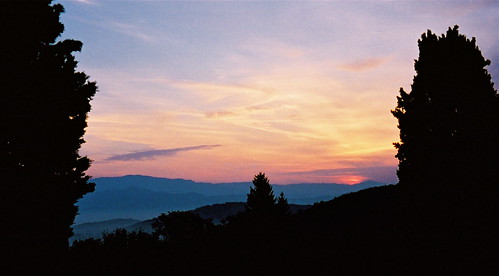
Tuscan Sunrise


Images: Brian Sibley © 2010, uploaded via my flickr Photostream.