It's
Mother's Day, or as my Mum and David's Mum always insisted on calling it...

Unlike Father's Day, Mothering Sunday is a very old custom preceding - by many centuries - the current annual bonanza for choc-makers and florists.
In fact, a religious event celebrating motherhood has existed in Europe since around 250 BCE, when the Romans had a mid-March festival in honour of Cybele
(right), the Magna Mater, or mother of the gods.
As the Roman Empire and Europe converted to Christianity, Mothering Sunday celebrations became part of the church's calendar with the fourth Sunday in Lent being set aside to the honouring of the Virgin Mary and 'mother church'. On this day, during the sixteenth century, people used to attend a service in the church where they were baptized and folks who did this were commonly said to have gone 'a-mothering'.
Other names given to this festival include Refreshment Sunday (because, being half way through the 40 days of Lent, the fast was relaxed for a day) and Simnel Sunday, from the custom of baking Simnel cakes.

Simnel cake (the name probably comes from
simila, the Latin word for fine, wheaten flour) is a fruit cake, not unlike a Christmas cake, covered in marzipan and, sometimes, with
another layer of marzipan or almond paste baked into the middle of the cake.
Yummy!Around the top of the cake are eleven marzipan balls representing the true disciples of Jesus (Judas being excluded) and, in some cases, with single, larger, ball of marzipan placed in the centre of the cake to represent Christ. Today, they will probably also feature a few fluffy chicks and be dotted with mini-chocolate eggs, but there are all kinds of variations on the Simnel cake tradition.
In the 18th and 19th Centuries, Mothering Sunday was the one day in the year when domestic servants were given a day off in order to visit their mothers and families, often taking with them a home-made Simnel cake, baked in their employers' kitchens.
If Valentine's Day is one of the least popular dates in the calendar for the unattached, then, I guess, Mother's Day is the equivalent for the motherless son or daughter.
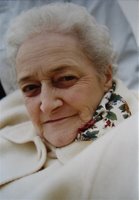
It's almost ten years since the death of my Mum, Doris.
She was great worrier, my mother - a trait she passed on to me in spades (
thanks, Mum!) - so there are some things that I'm glad she didn't survive long enough to worry about, such as seeing me walking with a stick and affected by a similar arthritic disease to the one that so painfully crippled the last years of her life.
But there are many other things that I really wish she
had lived to see - like David and I getting legally hitched, because she and my Dad (along with David's parents) not only accepted, but lovingly
embraced, our relationship.
And I'm so thankful that she saw me achieve some of my best work and justify the support and encouragement that she and my Dad gave me when I embarked on the career of a freelance.
But -- and, oh, it is such a big 'but' -- even after so many years, I still miss my mother (irritating and frustrating through she could sometimes be - unlike
me, of course!), and I'd give anything to be able to pick up the phone to her today and have a chat...
Fortunately, in the years since first I, and then David, were 'orphaned', we've been lucky enough to have a couple of Honorary Mums which is the next best thing.
Today, for instance, our good friend Sophie will be sharing
her Mum, Wendy, with us and if I tell you that Wendy makes one of the meanest trifles in Christendom, then you'll see why anyone would be happy to have her as a surrogate mum!

For all Mums everywhere (and to the memory of Mums who are no longer with us) here's is Anita Renfroe's hilarious 'Momsense' song...


 Unlike
Father's Day, Mothering Sunday is a very old custom preceding - by many
centuries - the current annual bonanza for choc-makers and florists.
 Simnel cake (the name probably comes from simila, the Latin word for fine, wheaten flour) is a fruit cake, not unlike a Christmas cake, covered in marzipan and, sometimes, with another layer of marzipan or almond paste baked into the middle of the cake. Yummy!
 It's almost fifteen years since the death of my Mum, Doris.
 A – Age: 59 --- for five more days only!

 Many years later - I sang and (sort-of) danced in To Sea in a Sieve, a musical play based on the life and verses of Edward Lear (right) written with my composer friend, Dave Hewson, and performed with Polly March (playing everyone except Edward Lear, including Queen Victoria and a parrot!) at the Edinburgh Festival and then at the Westminster Theatre, London.


